
Dear readers,
This article contains affiliate links.
If you choose to purchase
any of the recommended products
through these links,
I may earn a small commission
at no additional cost to you.
Thank you for taking the time
to read this article
and for your trust and support.
About This Story
This blog explores jewelry inspired by the egg as an exotic decorative motif in jewelry design, a form that the visionary jeweler Peter Carl Fabergé, through his avant-garde artistry, exceptional craftsmanship, and innovative ideas, elevated to one of the highest achievements of the jeweler’s art.
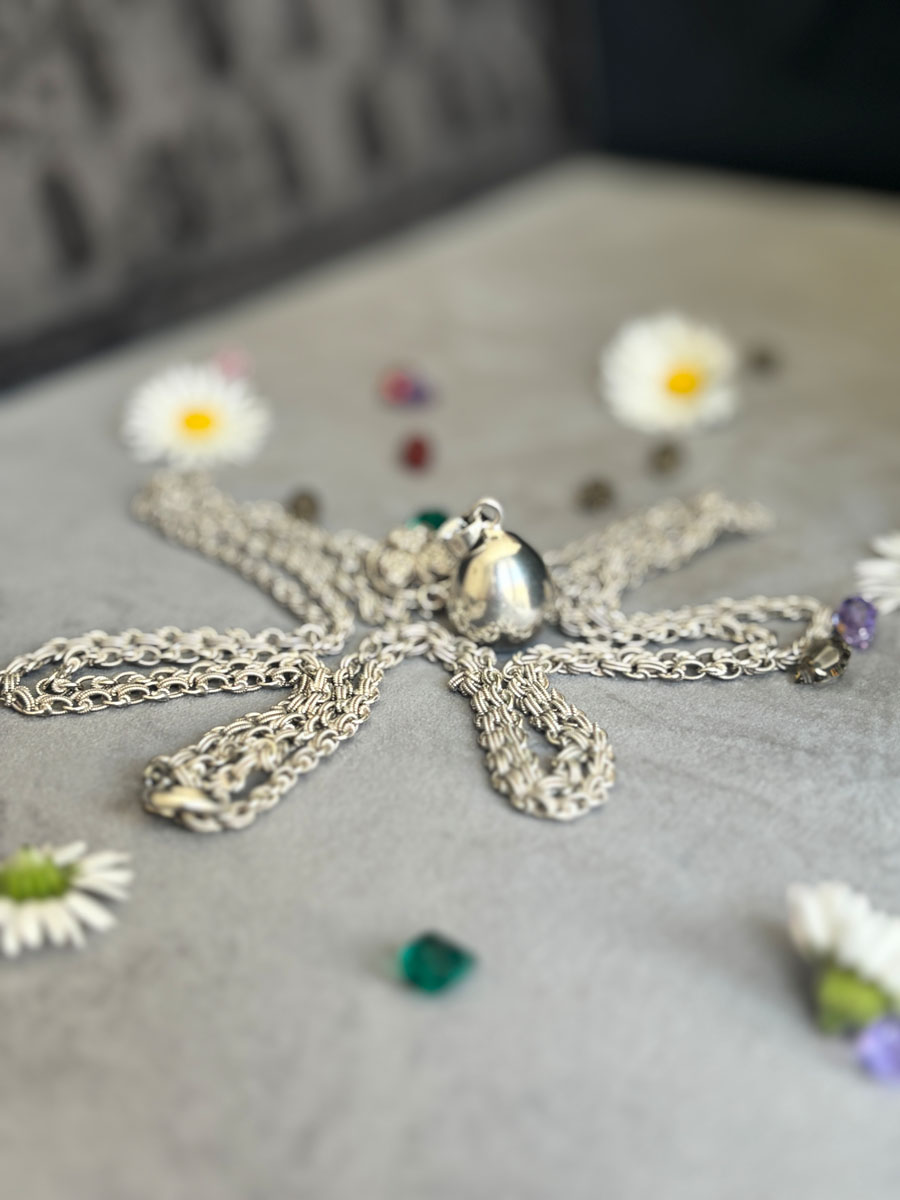
In addition, I hope to remind you of some of the world’s most significant art museums that preserve and present remarkable works by Peter Carl Fabergé, as well as their richly illustrated publications dedicated to his extraordinary artistry, the world of decorative arts, exceptional craftsmanship, and the refined enamel traditions that shaped his creations. Throughout this blog, you will also discover examples of egg-shaped necklaces and pendants from a collection that I have been developing over the years, both personally and professionally, as an anthropologist.
From Symbol to Art
According to Christian tradition, the Roman Emperor Tiberius did not believe Mary Magdalene when she told him that Christ had risen, saying to her, “The egg you are holding will turn red before I believe it.” Miraculously, the egg did turn red. From that moment on, the tradition of decorating Easter eggs, which symbolized the triumph of life over death, evolved into a distinctive decorative art with its own styles and symbolism in both the Orthodox and Catholic worlds. Over time, the long- standing tradition of decorating eggs became a subject of high art, ranging from folk techniques to luxurious artistic creations.


When Nature Becomes Art
Did you know that in the Serbian Orthodox tradition, the first Easter egg to be dyed is always red? It is kept in the home until the following Easter and is known as the čuvarkuća, meaning “guardian of the home.”
Traditionally, eggs are dyed with natural ingredients such as onion skins, nettles, and beetroot. Before dyeing, a clover leaf, a sprig of parsley, or a rose leaf is placed against the shell, and the egg is wrapped in a stocking, creating delicate botanical patterns in natural colors.
In Ukrainian folk art, an elaborate wax-resist technique is well known, with ornamental motifs symbolizing prosperity, progress, and protection.
From Symbol to Masterpiece
The egg became a remarkable source of inspiration for decorative arts and jewelry when the jeweler Carl Fabergé received a commission from Tsar Alexander III of the Romanov imperial family to design and create a luxurious Easter gift for his wife, Empress Maria Feodorovna, in 1885.
This marked a turning point in the history of jewelry design. Following the creation of the first Imperial Easter Egg, each new Fabergé egg became highly anticipated as a new artistic achievement. These extraordinary creations combined exceptional craftsmanship, artistic innovation, and ingenious mechanisms that concealed exquisite miniature surprises within.
Fabergé’s rich imperial-era production gave rise to exceptional decorative objects and jewelry. Some of the most celebrated Fabergé eggs are preserved and exhibited at the Walters Art Museum in Baltimore, whose extensive collection spans a remarkable chronological range from antiquity to the modern era. The museum presents outstanding examples of sculpture, fine art, and decorative arts through contemporary museum practices.
To continue exploring Fabergé’s legacy, visit our blog about the Fabergé Museum in St. Petersburg, which houses an impressive collection. Another important part of Fabergé’s heritage can also be discovered at the museum in Baden-Baden.


A Beautiful Choice
The Continuity of Artistic Excellence
A privilege of the contemporary era is the existence of exceptional jewelry houses whose creations represent the highest standards of artistic craftsmanship. Today, exceptional jewelry houses continue to create extraordinary pieces for individuals who seek beauty, craftsmanship, and the enduring value of timeless design. One such example is Fabergé London, a contemporary jewelry house inspired by the remarkable Fabergé heritage, creating egg-shaped pendants through a diverse range of designs: from minimalist creations and enamel eggs that reveal an inner artistic world with opening mechanisms, to spectacular pendants that shine with the kaleidoscopic brilliance of gemstones.
The egg-shaped earrings by Fabergé London are a remarkable expression of contemporary high jewellery, transforming the iconic egg form into elegant creations. Combining refined design and exceptional craftsmanship, these pieces continue the legacy of the Fabergé aesthetic while introducing a modern vision of wearable art.
For those who appreciate high jewellery with a strong artistic identity, I recommend exploring Bibi van der Velden’s sculptural creations. This Amsterdam-based high jewellery brand is celebrated for its artistic vision and innovative approach to jewellery design, creating wearable sculptures that combine contemporary luxury and refined elegance.





Jewelley as Cultural Expresson
Jewelry is not merely an aesthetic object; it carries meanings that extend beyond beauty, reflecting cultural values, personal identities, and social relationships.
As part of fashion and dress, jewelry has historically, and particularly throughout the 20th century, participated in social reproduction as both a shaper of culture and a reflection of society’s values, tastes, and identities.
Whether created from organic materials, natural berries, straw, synthetic materials, precious metals, or gemstones, jewelry — a piece most often imagined as an adornment worn by a woman — enhances her appearance, highlights her individuality, and illuminates her beauty.
The Egg: A Timeless Inspiration in Applied Arts
To me, the egg is a fascinating motif in decorative and applied arts. Its unusual form is especially captivating in luxury handbag design. Glass art has also embraced the egg shape throughout history, inspiring artists to create both functional objects and abstract sculptures. I am particularly drawn to contemporary designs that explore this timeless form. One remarkable example is a beautifully crafted glass sculpture that also serves as an elegant candy dish.